
Concorde Day
✈ 50 YEARS · 1976 – 2026 ✈
The Mystery
engineers in Bristol built a passenger jet that flew at TWICE the speed of sound.
Nobody has done it since. How did they do it?
Mission: Alpha Foxtrot
You are about to board the last Concorde ever to fly.
14 things to find
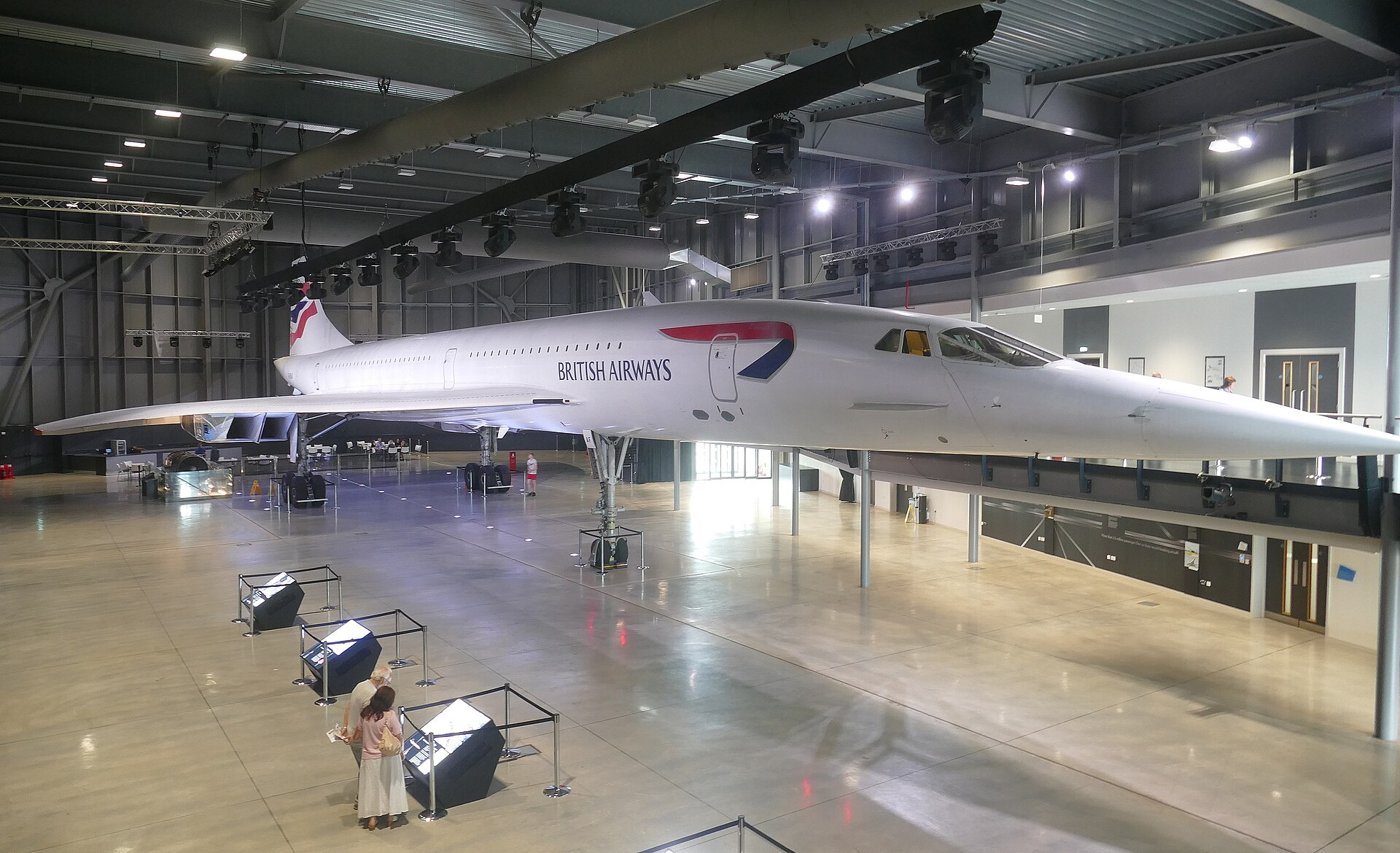
🕵️ Work as detectives
Teams of 3–4. The answers are hidden on board Alpha Foxtrot and around the museum — on displays, in the cabin, in the cockpit.
🏆 Every box ticked
Question 12 is the special one: find a detail nobody else spots. Bonus points if the instructor didn't know it.
1The Shape — a triangle called delta
The problem: a normal wing that works at 1,350 mph is terrible at 180 mph — and you must land at 180 mph.
The answer: one huge triangle. No flaps, no slats — just elevons. At slow speed she tilts her nose high and the wing makes spinning tornadoes of air (vortex lift) that carry her like a kite.
The catch: landing that nose-high, the pilots could see only sky. So the engineers made the whole nose bend downwards — 12.5°.
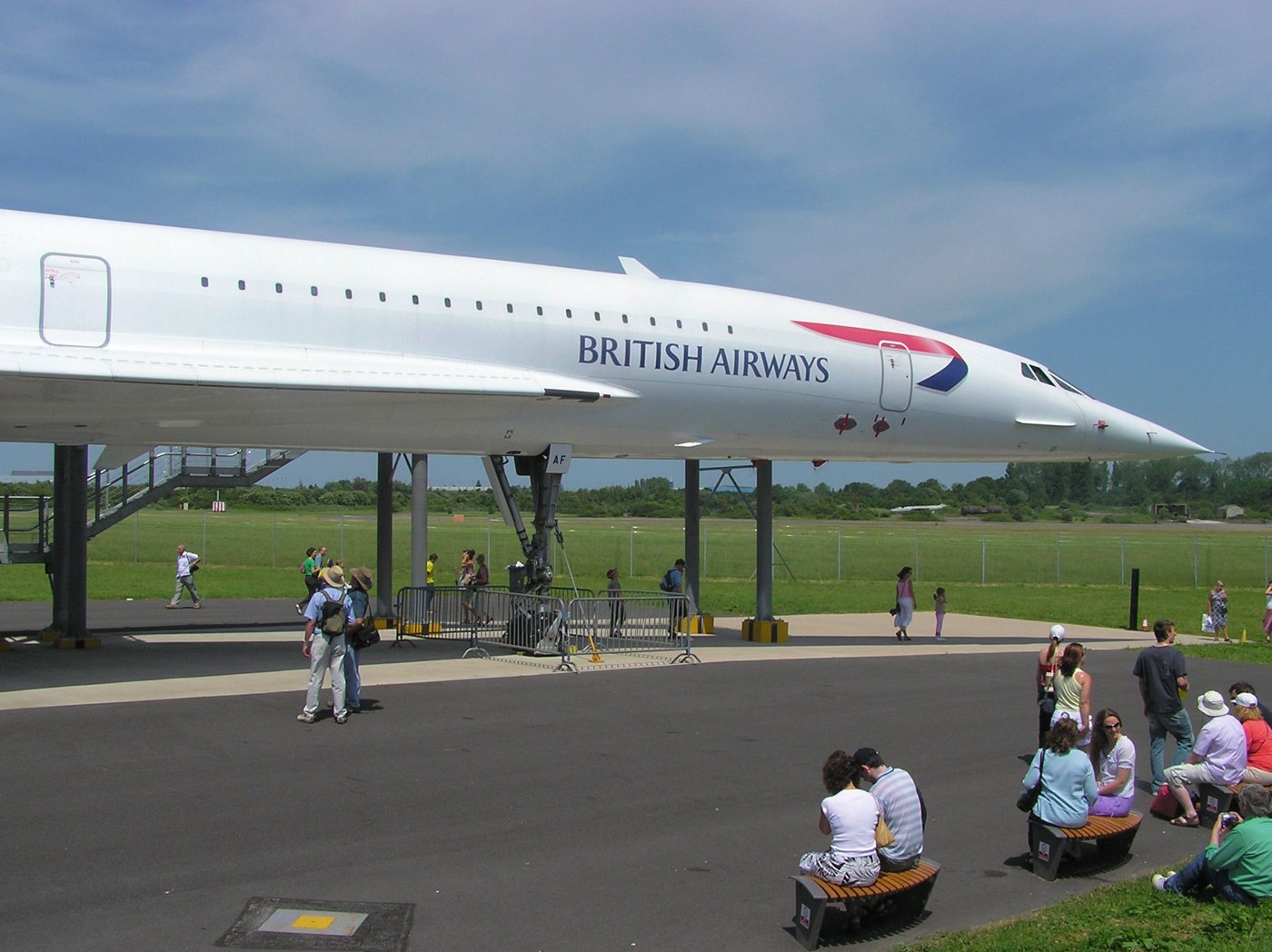
The droop nose you saw this morning — cameras of the 1960s were not good enough to land with, so they bent the aeroplane instead.
▶ 60-sec Short — watch it droop (Captain Joe)
🎬 Raw droop-nose demo3The Engines — the intakes did the thinking
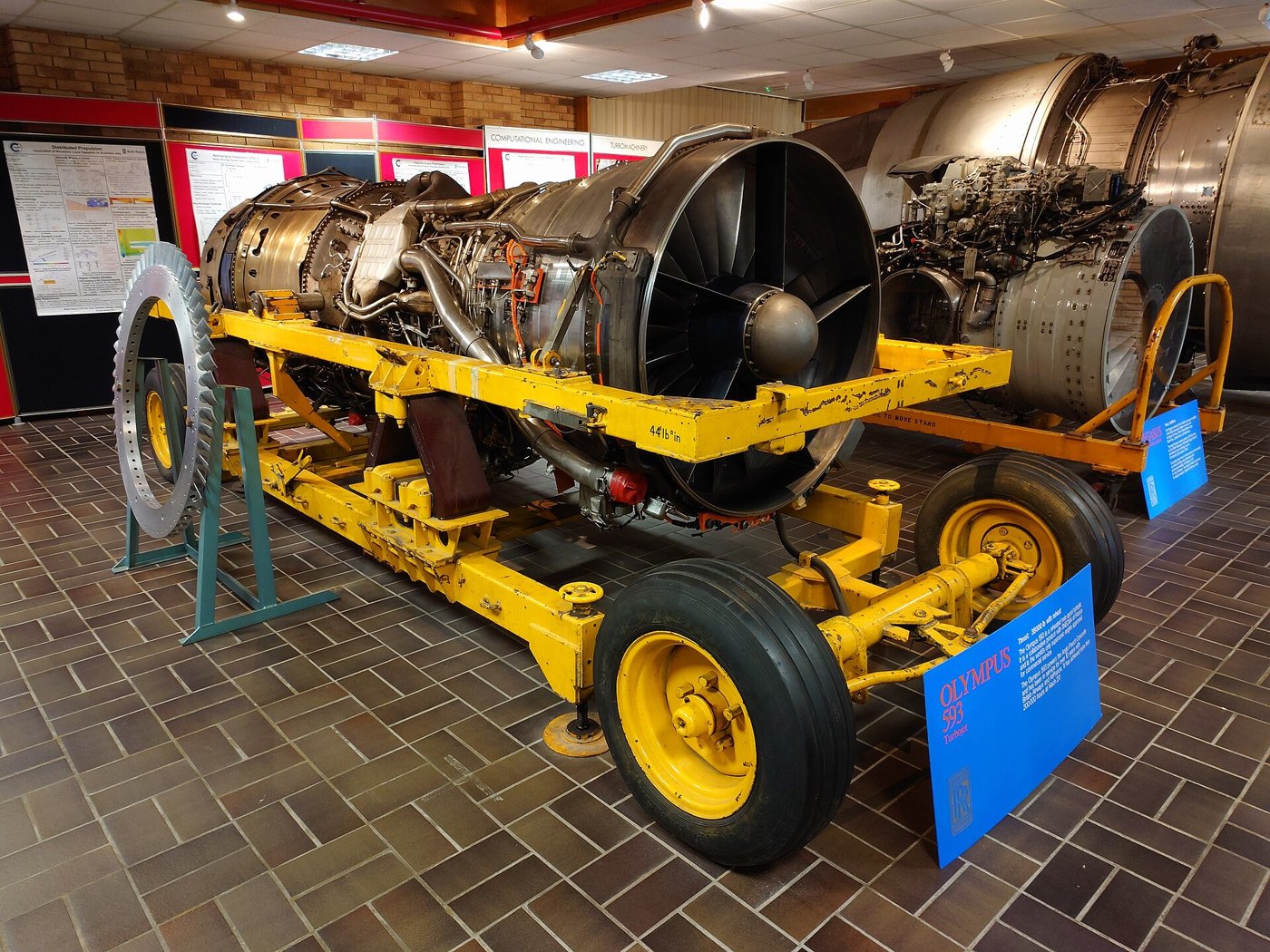
An Olympus 593 — you stood next to one this morning.
Four Olympus 593s — the only airliner ever with reheat: fuel sprayed straight into the hot exhaust for a monster push at take-off and through Mach 1.
The problem: jet engines choke on supersonic air. Feed them 1,350 mph air and they simply stop working.
The miracle: moving ramps inside each intake slowed the air from 1,350 mph to 500 mph in just 4.5 metres — adjusting themselves many times a second. The intakes did the thinking.
4The Balance — flying by pumping fuel
The problem: passing Mach 1, the lift holding her up suddenly slides 2 metres backwards along the wing. Nose drops. Unfixed, that is fatal.
The answer: if the lift moves back, move the weight back to match — by pumping fuel between 13 tanks, nose to tail, in flight.
Whose job? The flight engineer — the third crew seat you saw this morning. Every flight, by hand. A human being balancing 185 tonnes at 1,350 mph.
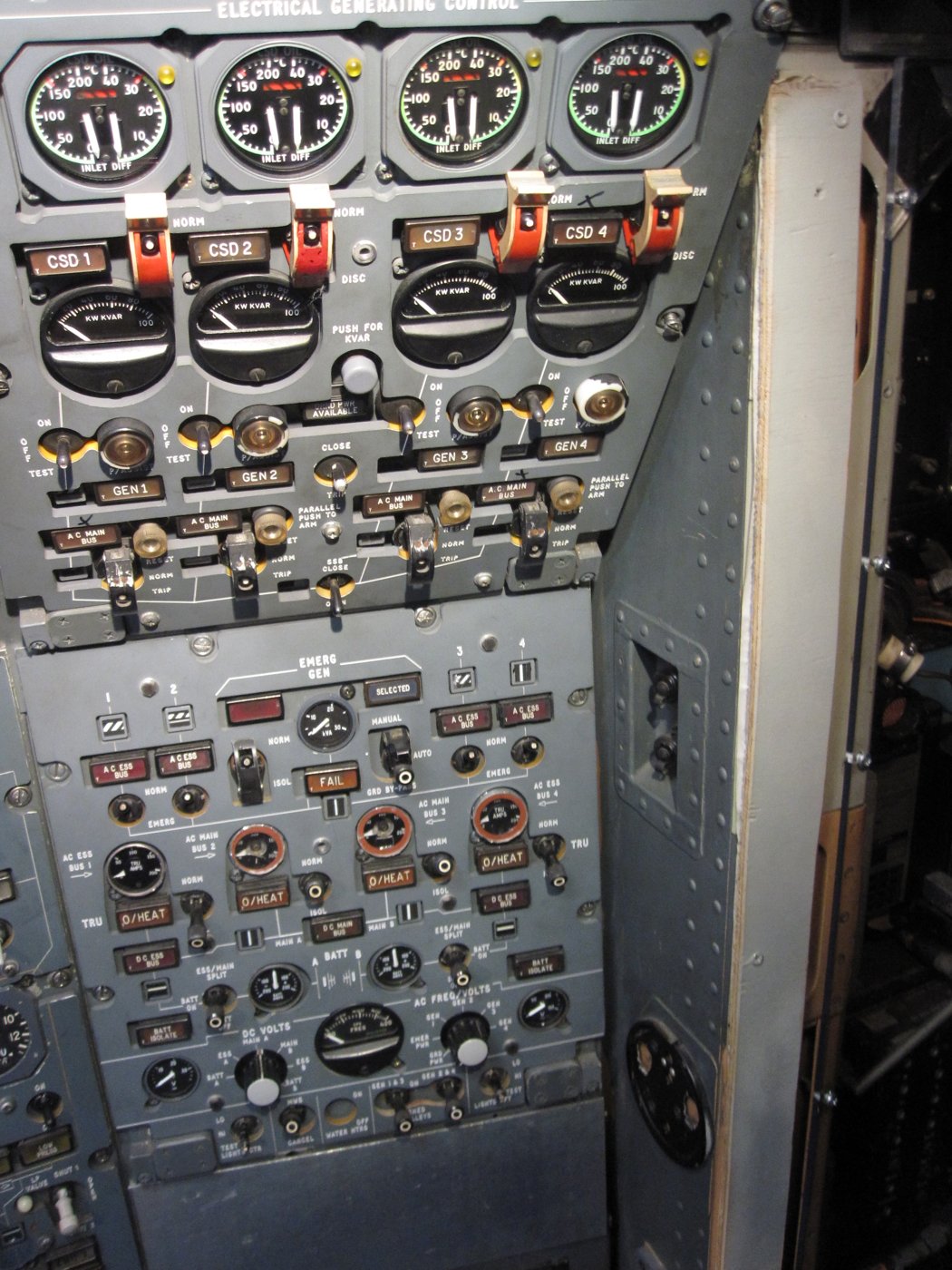
The flight engineer's wall of dials — fuel pumps included. No screens. 1960s.
See you at Mach 2 ✈
solved five impossible engineering problems — and then flew her.
Photos: Wikimedia Commons — Eduard Marmet (CC BY-SA 3.0), Adrian Pingstone (public domain), William M (CC BY-SA 3.0), Alan Wilson (CC BY-SA 2.0), Nimda01 (CC BY-SA 4.0)
You Have Control
This morning you stood in her. Now you fly her.
🎬 "As Real as it Gets" — full Concorde flight with real crew audio, ATC and checklists (Into the Blue Simulations)
Controls
| ← → or Space | Previous / next page |
| G | Grid of all pages (jump anywhere) |
| I | Instructor mode — gold tip panels on/off |
| F | Fullscreen |
| Home / End | First / last page |
| Esc | Close overlays |
Progress is per-page in the address bar — bookmark or share #page numbers. Videos need internet; everything else is fully offline.